
The New Normal

IMG_1434

In this blog, I try and find correlations between my professional experiences in transforming global companies and professionals, and my personal journey with cancer.  If you have been following me of late, as of October 2015 I have been pronounced cancer free – again – by my multiple teams of doctors at MD Anderson in Houston, Texas. (YEAH!)

On my last visit in December 2015 for a neuro consult (they had to make sure my brain was still there… HA!)  I was again deemed healthy and cancer free.  After 12 surgeries and procedures in less than three years, things happen with your body that for me, the patient, were not expected.  The docs may know, but… With much scar tissue and muscle removed in various areas of the body, things grow back differently than before.  Nerves have been cut, muscles are not there, scar tissue abounds. Your brain reacts to the multiple (12) sessions of anesthesia.  This last doctor visit provided me the direction for this blog post when she said “Bob, you need to adjust to the new normal’“.

Sure I know how old I am and many of the insights I have about how I feel and function I would have thought would have come with a more mature perspective on life – not mention age. (OK, I know I tell people I am 39, but, my daughter is 37 and son 35, so YOU do the math….)

So just what is “the new normal”?  Please remember my insights here are both personal and professional.  On the personal side, I have changed my outlook on life.  Please see my blog post  What you see isn’t always reality…

Staying true to the NO TMI (Too Much Information) focus of this blog, trust me when I say I  live my life differently than before and people around me have no clue.

From a professional view, I am learning more every day.  Actually it is more correct to say I am remembering more every day.  I look at clients from a more “personal” view.  I see them more as people, not part of a business.  OH yes, the business process, the competitive position, the bottom and top line drive, etc. are still quite critical and central in my perspective for my clients.  But, I now look at my professional relationships as more than people to help me make money by selling more product for my employer.  By understanding my clients have personal insights, needs, and are driven by their own companies culture and business needs, it helps me be a better advisor, confidant, and “trusted business advisor”  (OK, yes, I really dislike that phrase “trusted business advisor”, but it is a reality in our business) to them.  THAT will help my employer establish relationships that will last over time beyond the transaction – and make us money – and create true business value and relationships for/with our clients.

So what does this have to do with “the new normal”?  My personal “new normal” has changed many times over three years.  I know that my reality can change hourly if not monthly.  The technology industry that I have been in for almost 40 years is a “light-speed” changing industry.  My client industries and companies change at their own speeds – but VERY fast compared to 20-30-40 years ago.  My personal “new normal” lasts for six months – until I go and get my new round of cancer scans and tests which the docs say are expected to be clean and clear of cancer.  But for my clients and industries worldwide, “the new normal” is always changing.  What we know is, what is true for today will change tomorrow.

What does this mean for companies and for your own professional perspective?  It means slow down and listen.  It means look at your business partners, colleagues, clients, customers as people with their own personal and business objectives.  It means when you listen, listen to understand, not just respond.  It means best practices aren’t.  They are good for THAT company, for their processes, at that point in time.  NOT for you.  But you can learn from it.

In the end, my personal journey with cancer has provided my with a refreshed and renewed view of experiences I have learned in my career and the people and opportunities I have met that have helped me learn.  As I go forward with my career over the next 10 years, I look forward to using my skills, experience, and insights to provide value for my clients/customers, employer, my peers/colleagues, and my team and students to be more effective in their own situations to provide more value in their world.

Zero Core and Re-IPL

“The only thing new in the world is the history you do not know.”

― Harry S. Truman

Isn’t it funny how as you get older, you remember things from many years ago?  I am sure my extended time in the hospital, the time to recover, and the (wonderful!) pain medications all had something to do with it.  Lots of time to think as the nurses make their rounds every two hours to wake you up to poke and prod.
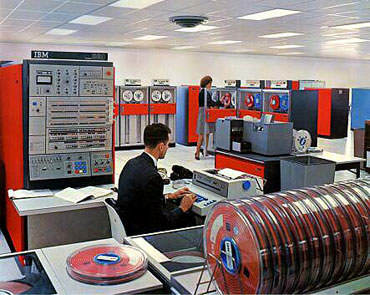
In the mid-to-late 80’s I was working for what was then the worlds second-largest computer company.  I had an awesome opportunity to work with a team of professionals to build a global computer services business. Back then we called it computer timesharing.  That industry started back when computers were HUGE, very expensive, and had about 1/100th (1000th?) of the power of the Smartphone you have today.  NASA, governments, and very large corporations used these behemoths to run their operations.  I know, because to pay for college, I was a third shift computer operator for a major university on an IBM 360/50.  Quite an experience watching blinking lights, punching 80 column cards for computer programs, and knowing my work made the university run.
Zero core (reset the computer memory) and re-IPL (reinstall the Initial Program Load) is what you would do to the mainframe computer to turn it off and restart it.  Today we might say “Is it plugged in? Is it turned on?” or even “turn it off, and turn it on, again…”
But I digress.  For giant companies like McDonnell Douglas, General Electric, and United Telecom (now Sprint) they started computer timesharing businesses to allow people who could not afford these computers to share compute time on them – hence, computer time-sharing.  Other computer timesharing companies like Tymshare were formed as well to provide access on a pay-as-you-go basis and were very successful.   These computers were accessed through computer networks. Some had dial-in network access to the computers and some had dedicated network access. Special software was installed for the user to use.  The users were charged only for the time they used the computer, networks, and software.
My role was to work with my team and build-out seven data centers and develop a profitable go to market business and operating plan. Complete with raised floors for cooling, uninterruptable power supplies with multiple power grids, multiple telecom networks, operating and disaster recovery procedures…  Well, you get the idea.  Building an entirely new business with seven new data centers to allow people to use computing power and pay only for what they use.  In the end, I led the creation of this computer services (timesharing) business for my company. The key never was just to build and operate seven data centers. It was how to build a profitable business that would deliver value to our customers. In the end, it was very successful and part of the skills and experience I have brought with me throughout the years.  Amazing what you remember…
It occurred to me that over 30 years later, we call that same business concept:  cloud computing.
Who remembers artificial intelligence: the concept of having a computer learn?  By pumping massive amounts of data into a computer, writing very sophisticated software algorithms, and discovering new opportunities in the massive complex data was a truly exciting time.
After a lot of time to think, it occurred to me that today, almost 30 years later, we call that same business concept:  business analytics.  Today we have the Internet of Things ( or the Internet of Everything or even Digitization) that is driving business analytics.
Sure, I get it. Economics and technologies are very different today.  Computing power and network access are widely available, small in size, and comparably very easy to use. But in the end it winds up being the same, but different.  It seems to me we must learn from experience and combine it with a vision of the future to make the value of these approaches real for today.
In the technology industry, as with many industries, the company that is agile and masters disruption, finds the “next wave”, introduces the next new product, capture a new market, etc. is the one that will be rewarded by the market.  Executives that have respect for those who have experience with past business models similar to new trends will have a competitive advantage leveraging disruption to their own competitive advantage.

How to make bad decisions faster…

Making Majic

Data.  Lots of it.  When I first learned that I had cancer in January 2013, I knew nothing about cancer.  My wife and I immediately started a crash course learning as much as we could.  The first time it was prostate, the second time it was renal, and the third time colon cancer.  I can’t begin to tell you how much information there is available about cancer.  To the neophyte (not even a novice) the data was overwhelming.  So many sources, that in the end, one of our first priorities was to talk with credible professionals with lots of experience.  We also learned that many internet sites were not credible (Now isn’t that a shock? HA!)  So we stayed with the trusted sources like MD Anderson, Johns Hopkins, Mayo, and others.  Today, I have five teams of doctors at MD Anderson that have my back and help us sort through our questions and provide us insight to make our own choices – do something with the data.  In the end, you are your own best advocate.  But today we still sort through so much data to be informed and make good decisions.

That takes us to the dictionary…

Forget spellcheck or using Google. Remember the dictionary?  Yes, the book.  Now think for a minute.  What does a dictionary do?

Back in 1995, I had the opportunity in Manchester, England to make a presentation on e-commerce to over 1000 supply chain, sourcing and procurement professionals.  The focus of the presentation was how the information being shared using e-commerce was going to change the industry.  My team had been instrumental in implementing a major UK retailer’s first e-commerce system.  It even was the focus of a Financial Times special report.  Prior to taking the stage, a crazy idea struck me.  It was either going to be impactful – or make me look quite crazy.

I took a large book and walked on stage.  I had no clue what the book was – it was big.  I started the presentation without slides, held the book high in my hand, and asked “What does a dictionary do?”  The audience started to get quiet as I got their attention.  I asked again “What does a dictionary do?”  As the room got quiet, a few people raised their hands.  I picked one person who answered “It gives us definitions of words!” Another answered “It tells us how to pronounce words!”  HA!  Just what I hoped would happen.

I threw the book on the stage with a loud THUMP.  I yelled at the book “Give me the definition of ‘computer’.”  The book did nothing – of course.  I then made the pronouncement that “This book does nothing!”  The audience laughed…

Today, instead of e-commerce, there is much discussion about digitization, Internet of Things (IoT), business analytics, etc.  The foundation for these technology driven business approaches is that data is being made available from many more sources around the world.  This is a tremendous opportunity for insight and discovery.  But, like the dictionary, the data does nothing. (Yes, we can also discuss at length the difference of data and information…)

Like the dictionary, it takes a person who knows what the book (data) is and how to use it.  Someone with the skills, experience, and knowledge of how to use the book and then do something with what they find. Someone must apply the data to have a business impact and provide some kind of value to the business.  That is the key.

One of my personal interests of late has been the recent focus on business analytics.  Many of the consulting studies, board meetings, and executive discussions I have participated in has been focused on do you build the infrastructure to collect the data first then find the problem? Or do you define the problem then collect the data?  It seems that if the initiative is driven by IT, then the data is collected first, then they search for a problem to solve.  If driven by the business, the problem is defined first.  Even a major university I have discussed this with has two separate approaches.  The IT department and Supply Chain department are taking these same different approaches, when indeed they should be integrated for maximum impact and value.

The other business analytic topic discussed at length is the lack of data scientists to analyze the data.  In the end, the skills and experience needed to solve business problems goes far beyond those of a data scientist.  Experts in business process (sourcing/procurement, manufacturing operations, etc.), program management, and other skills along with a data scientist are required to take the data and do something with it.

In the end, technology is a game changer.  Today tons more data is being accessed by new technology.  This data does nothing until you provide it context by applying it to a business process and having a skilled, experienced human do something with it.  That is the business relevance of technology.  Otherwise we are destined to use technology to make bad decisions faster.